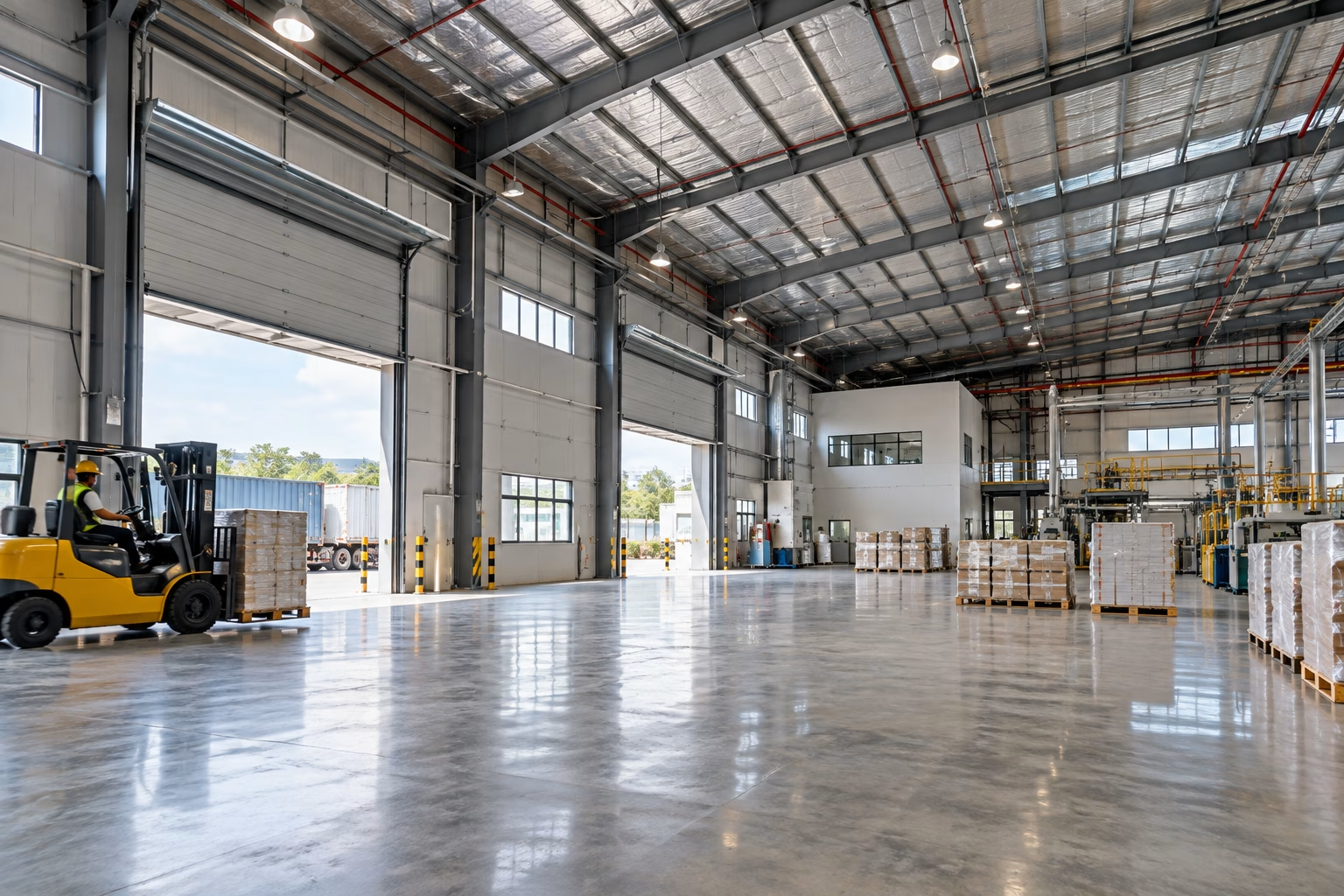
A factory advertised at RM25,000 per month may appear more affordable than one listed at RM30,000. Yet the cheaper premises could require substantial electrical work, machinery relocation or alterations before operations begin. Those costs can erode the apparent saving.
For manufacturers, logistics operators and growing businesses, factory rental costs in Penang extend beyond the asking rent. An informed decision accounts for deposits, recurring charges, fit-out expenses, operational suitability and the financial obligations written into the tenancy agreement.
This guide explains how to compare factory rentals across Bayan Lepas, Prai, Bukit Minyak, Batu Kawan and Simpang Ampat. It also provides a practical cost model so businesses can distinguish a genuinely suitable property from a superficially inexpensive one.
What Determines Factory Rental Costs in Penang?
Location, usable space, building condition and industrial specifications largely determine how two factory rental offers compare. A similar advertised floor area does not guarantee similar operating costs.
Location and industrial connectivity
Location influences delivery routes, workforce access and the time needed to reach suppliers. Bayan Lepas offers an established industrial setting on Penang Island, whereas Prai, Bukit Minyak, Batu Kawan and Simpang Ampat provide different mainland options. A business handling frequent deliveries should examine actual journey patterns and vehicle access rather than assume the lowest rent produces the lowest overall cost.
Built-up area versus usable production space
Built-up area and land area describe different measurements. A listing might advertise 20,000 sq ft of constructed space on a larger plot, but some of that floor area could comprise offices, mezzanines or circulation space. Before comparing rental rates per square foot, ask which areas the quotation includes and whether they can support the intended activity.
Condition and existing facilities
A well-maintained factory with appropriate loading access and electrical infrastructure may require less preparation than a cheaper bare unit. Nevertheless, existing facilities are valuable only when they suit the tenant’s operations. Inspect the building and verify its specifications before assigning a financial benefit to those features.
How Do Penang’s Industrial Areas Compare for Factory Tenants?
No single Penang industrial area is automatically the most economical choice. Businesses should assess each location against their production requirements, delivery routes, staffing arrangements and available properties.
| Area | Location consideration | What to verify |
|---|---|---|
| Bayan Lepas | Penang Island manufacturing location with airport connectivity | Industrial-use suitability, workforce access and delivery routes |
| Prai / Perai | Established mainland industrial location | Building condition, loading arrangements and site access |
| Bukit Minyak | Mainland factory and warehouse options | Available electrical supply, circulation space and occupancy charges |
| Batu Kawan | Industrial development and expansion options | Building configuration, fit-out needs and lease conditions |
| Simpang Ampat | Mainland access to surrounding industrial areas | Factory type, logistics suitability and availability |
For a more location-specific rental process, read Industrial Prop Street’s guide to securing a Batu Kawan factory for rent. Businesses can also compare Batu Kawan factory rental options and Bukit Minyak factory rental options. Availability and asking prices should be confirmed directly before making a decision.
Which Costs Should You Budget Beyond Monthly Rent?
A realistic rental budget separates initial cash commitments, ongoing expenses and one-time setup costs. This distinction prevents refundable deposits from being confused with permanent expenditure and makes competing offers easier to evaluate.
Deposits, advance rent and agreement expenses
Tenants may need to pay a security deposit, utility deposit, advance rent and costs associated with preparing the agreement. The amounts and allocation of responsibilities depend on the negotiated terms; there is no reason to assume every industrial tenancy follows the same deposit formula.
Lease and tenancy instruments may also attract stamp duty. Malaysia’s Inland Revenue Board (LHDN) includes these instruments in the first phase of its Stamp Duty Self-Assessment System, introduced from 1 January 2026. Consult LHDN’s official STSDS guidance for the applicable submission and payment procedure. The duty payable depends on the instrument and relevant rules, not a universal flat-rate assumption.
Recurring occupancy expenses
Electricity, water, telecommunications, maintenance, security and waste management can add to the monthly commitment. Some services may be included in the quoted rent; others may be billed separately. Request an itemised explanation before comparing properties, particularly where a building has shared facilities or management charges.
Fit-out, machinery relocation and commissioning
Production equipment, racking, partitions, ventilation and loading-area changes can require significant one-time spending. A light-assembly tenant will not necessarily face the same costs as a business installing heavy machinery. Obtain quotations for the actual work, confirm the landlord’s approval and establish whether the proposed modifications are feasible.
How Do You Calculate the Effective Cost of Renting a Factory?
Compare each property over the same expected occupancy period. The calculation should combine rent, recurring expenses and setup expenditure while recording refundable deposits separately as a cash-flow commitment.
Consider two hypothetical factories with the same 20,000 sq ft built-up area:
| Cost item | Factory A | Factory B |
|---|---|---|
| Built-up area | 20,000 sq ft | 20,000 sq ft |
| Monthly rent | RM25,000 | RM30,000 |
| Monthly rent per sq ft | RM1.25 | RM1.50 |
| Illustrative one-time setup | RM180,000 | RM40,000 |
| Rent over 36 months | RM900,000 | RM1,080,000 |
| 36-month rent plus setup | RM1,080,000 | RM1,120,000 |
Illustration only: These are hypothetical figures, not verified Penang market quotations or average rental rates. The example excludes utilities, service charges, deposits, taxes, financing costs, rental increases and other potential expenses.
Factory A costs RM40,000 less over the assumed period when only rent and the stated setup costs are counted. That advantage could disappear if renovations delay production or its recurring operating costs are higher. The decision therefore requires more than a simple comparison of rental rates.
Practical formula: Total occupancy cost = rental payments over the chosen period + recurring occupancy expenses + one-time setup expenditure.
How Can Factory Specifications Change Your Occupancy Budget?
Building specifications affect cost because they determine what the tenant can operate safely and efficiently. Advertised figures provide an initial screening tool, not a substitute for technical verification.
Electrical demand and available supply
Manufacturing machinery, compressors and refrigeration systems may create substantial electrical demand. Establish the proposed equipment load and verify the capacity actually available at the premises; an advertised supply rating does not necessarily indicate spare capacity for additional equipment.
Tenaga Nasional Berhad’s electricity supply application guidance explains how connection arrangements depend on required load and why certain projects may need additional infrastructure. Engage an appropriately qualified electrical professional where significant upgrades are contemplated.
Floor loading and machinery placement
Floor-loading information must be interpreted against the proposed machinery and storage layout. Concentrated loads and vibration can require more detailed structural assessment than a headline loading figure provides. Request relevant building documentation and seek professional advice before committing to heavy installations.
Clear height, loading access and circulation
Usable clear height may be lower than an advertised building height because beams and building services occupy space. Likewise, a loading bay is only useful if delivery vehicles can reach it and manoeuvre effectively. Check these conditions during a site visit, preferably against a documented operational layout.
What Should You Compare Before Selecting a Factory?
Use a consistent evaluation framework rather than ranking properties by asking rent alone. The following table helps procurement, operations and management teams review the same decision factors.
| Factor | Information to request | Decision value |
|---|---|---|
| Rent | Monthly amount, chargeable area and escalation clauses | Establishes contractual rental exposure |
| Upfront cash | Deposits, advance payments and agreement expenses | Shows initial funding needs |
| Utilities | Available electrical supply, connections and charges | Highlights upgrade and operating costs |
| Physical suitability | Floor documentation, clear height, loading access | Tests operational compatibility |
| Fit-out | Scope, quotations, approvals and timing | Estimates setup cost and delay risk |
| Lease terms | Duration, renewal, repairs and reinstatement | Clarifies longer-term obligations |
| Location | Supplier routes, workforce access and delivery patterns | Reveals logistical implications |
What Must Tenants Confirm Before Signing?
Confirm permitted use, alteration rights, maintenance responsibilities and handover conditions before making a binding commitment. A building may appear operationally suitable but still require approvals for the intended activity or proposed fit-out.
Read the agreement’s provisions on rent commencement, repairs, renewal, deposit deductions and reinstatement. If major works are planned, clarify when the tenant receives possession, whether a fit-out period applies and which party bears the associated costs. Obtain legal and technical advice where the transaction or proposed operations warrant it.
Conclusion: Compare the Total Cost, Not Just the Asking Rent
The cheapest advertised factory is not necessarily the most economical premises to occupy. A sound rental decision considers the complete cash commitment, building suitability, operational expenses and the time required to become productive.
Industrial Prop Street helps businesses explore industrial property options in Penang. Compare relevant listings, request detailed specifications and assess the likely occupancy costs before choosing a factory.
Frequently Asked Questions
Can a company negotiate a rent-free fit-out period?
Potentially. A landlord may agree to a fit-out period depending on the property and negotiated terms. Record any concession, its dates and the rent commencement arrangements clearly in the agreement.
Are factory rental deposits refundable?
Refunds depend on the tenancy agreement and whether the tenant has met its obligations. Check the clauses covering deductions, outstanding charges and the return timeline before paying.
Should a business rent extra space for future expansion?
Only when the expected operational benefit justifies the additional cost. Compare credible growth plans against the expense of unused space and consider whether the building can accommodate future changes.
Can factory rent increase during an existing tenancy?
It can where the agreement provides for scheduled increases, rental reviews or other adjustments. Include those provisions in any multi-year occupancy calculation.
Looking for a Factory to Rent in Penang?
Explore factory rental options with Industrial Prop Street. Compare location, floor area and available facilities, then enquire about properties that suit your operational requirements and budget.