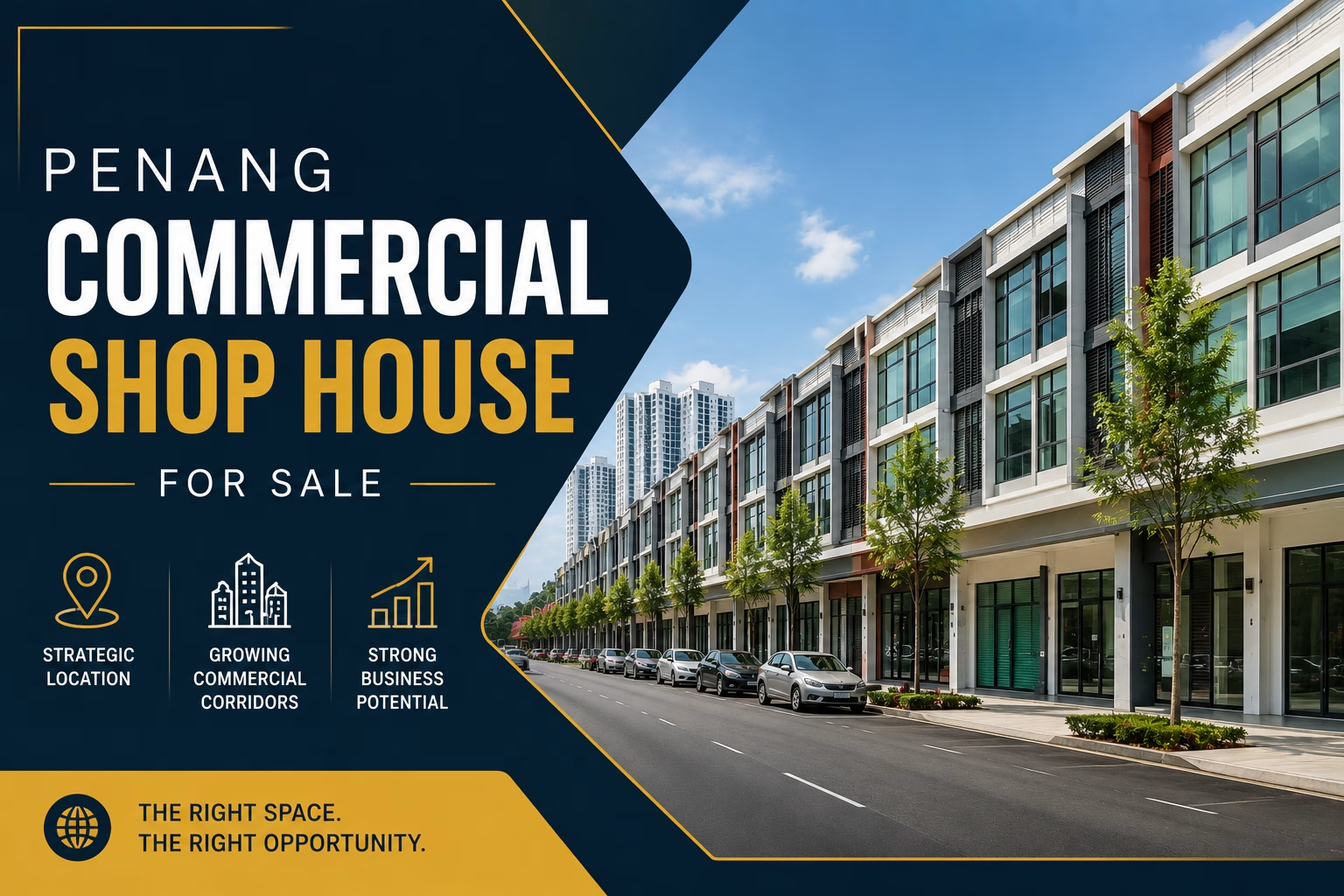
How Penang’s Growing Commercial Corridors Are Influencing Shop House Demand
For many years, commercial activity in Penang was heavily concentrated within established business districts such as George Town and selected urban centres on Penang Island. While these locations remain important commercial hubs today, the state’s commercial landscape has become significantly more diverse over the past decade.
Rapid population growth, expanding residential developments, improving transportation infrastructure, and the emergence of new townships have contributed to the development of multiple commercial corridors throughout both Penang Island and mainland Penang.
As a result, businesses are no longer focusing solely on traditional city-centre locations. Many companies are increasingly evaluating commercial opportunities within areas that offer strong accessibility, growing catchment populations, and long-term business sustainability.
This shift is influencing demand for commercial shop houses across the state.
Businesses searching for commercial property opportunities can explore available listings through Penang commercial shop house listings and additional commercial property opportunities via Industrial Propstreet.
Commercial Growth Is Increasingly Following Population Expansion
Commercial activity naturally follows residential expansion because businesses require access to customers, workforce availability, and daily economic activity. As new housing developments continue emerging across Penang, demand for supporting commercial services often follows closely behind.
This pattern is increasingly visible throughout mainland Penang, where areas such as Batu Kawan, Simpang Ampat, Bukit Mertajam, and Seberang Jaya continue experiencing residential and commercial expansion simultaneously.
The same trend can also be observed in selected parts of Penang Island, where mature residential communities continue supporting neighbourhood commercial centres.
Rather than relying exclusively on large shopping malls or commercial complexes, many businesses continue favouring shop houses because they offer direct street visibility, accessibility, and stronger integration within local communities.
For service-based businesses, professional firms, healthcare providers, education centres, retail operators, and food-and-beverage establishments, proximity to growing residential catchments often remains one of the most important considerations when selecting commercial premises.
This relationship between residential growth and commercial demand continues supporting long-term interest in strategically located commercial shop houses.
Why Commercial Shop Houses Continue Remaining Relevant in the Digital Economy
The growth of e-commerce has led some observers to assume that physical commercial properties may become less important over time.
However, the reality is often more nuanced.
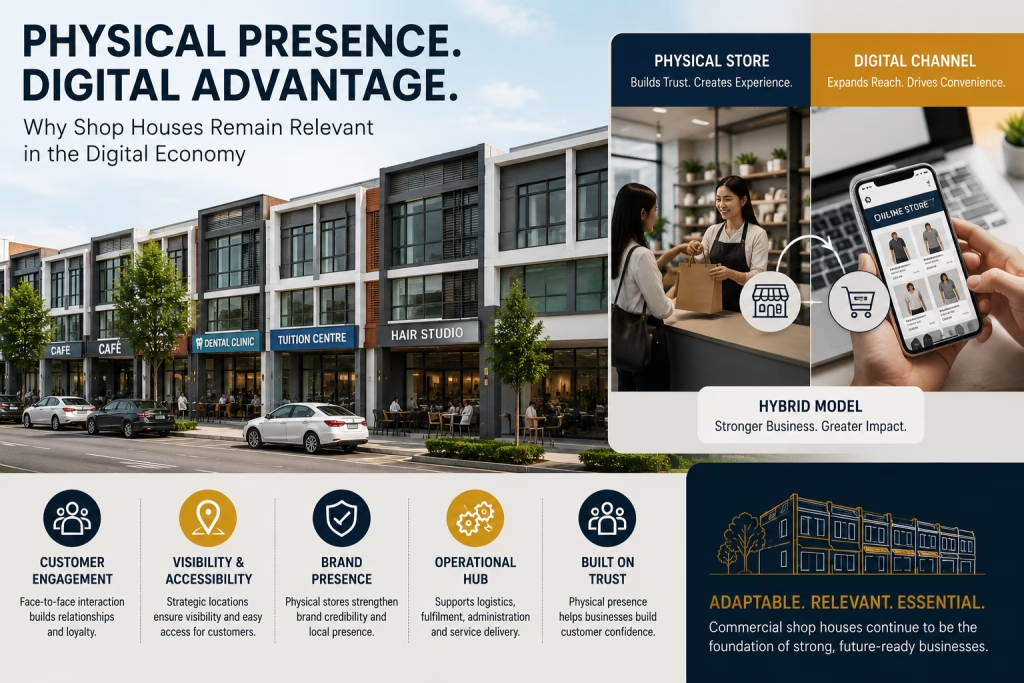
While online platforms have transformed consumer behaviour, many businesses still require physical locations to support customer engagement, operational activities, branding visibility, and service delivery.
Commercial shop houses continue offering advantages that digital channels alone cannot fully replicate.
For example, businesses involved in healthcare services, education, professional consulting, automotive services, beauty and wellness, food and beverage operations, and specialised retail often rely heavily on physical customer interaction.
A strategically located shop house provides visibility, accessibility, and brand presence within a community. It also creates opportunities for businesses to build customer trust and maintain a stronger local presence.
Many modern businesses now operate through hybrid models that combine physical and digital channels. In these cases, commercial shop houses function not only as customer-facing premises but also as operational hubs supporting logistics, fulfilment, administration, and service delivery.
This adaptability helps explain why commercial shop houses continue attracting strong demand despite the rapid growth of digital commerce.
Infrastructure Improvements Continue Reshaping Commercial Corridors
Infrastructure development remains one of the most important factors influencing commercial property demand.
Improved transportation connectivity often changes how people move, where businesses choose to operate, and which commercial districts experience growth.
Penang has benefited from substantial infrastructure investment over recent decades, including highway connectivity improvements, bridge expansions, transportation upgrades, and regional development initiatives.
The state’s integration with Northern Malaysia’s broader economic ecosystem has also strengthened commercial activity beyond traditional urban centres.
Malaysia’s Thirteenth Malaysia Plan (RMK13) continues emphasising infrastructure development, urban connectivity, economic competitiveness, and regional growth as key priorities supporting long-term economic expansion.
As transportation networks continue evolving, commercial corridors that benefit from strong accessibility are often better positioned to attract businesses and sustain long-term demand.
For commercial property buyers, understanding how infrastructure influences customer movement and business accessibility can be just as important as evaluating the property itself.
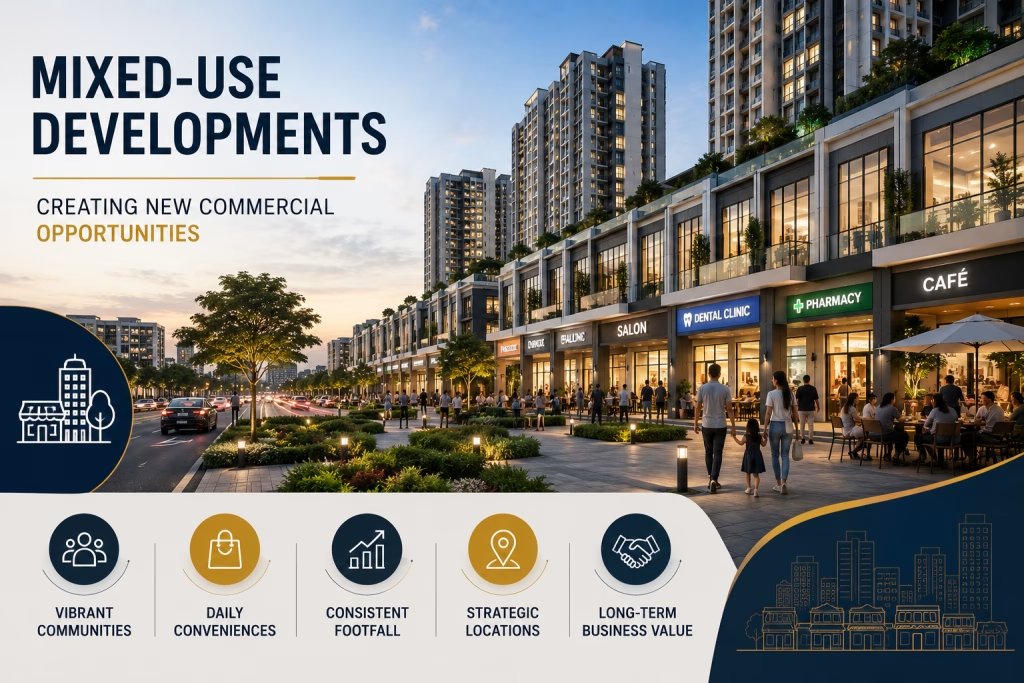
Mixed-Use Developments Are Creating New Commercial Opportunities
Another trend influencing shop house demand is the growth of mixed-use developments.
Modern urban planning increasingly integrates residential, commercial, recreational, and lifestyle components within the same development environment.
This approach creates more self-sustaining communities where residents can access services, retail outlets, dining options, healthcare providers, and professional services without travelling long distances.
Commercial shop houses located within or adjacent to these developments often benefit from consistent customer traffic generated by surrounding residential populations.
Unlike standalone commercial districts that depend heavily on destination visits, mixed-use environments create daily activity patterns that support local businesses.
This trend is becoming increasingly important as businesses seek locations capable of providing stable customer engagement and long-term commercial viability.
For commercial property owners, locations supported by strong surrounding ecosystems often provide greater business resilience compared to isolated commercial sites.
Business Visibility Remains a Valuable Commercial Advantage
Despite advancements in digital marketing, physical visibility continues playing a significant role in business success.
Commercial shop houses often offer direct frontage onto public roads, allowing businesses to maintain continuous exposure to passing traffic and local communities.
For many businesses, visibility contributes to brand recognition, customer acquisition, and long-term business growth.
This is particularly relevant for businesses that rely on repeat local customers, walk-in traffic, or community-based services.
A strategically positioned commercial shop house can function as both an operational space and a marketing asset.
Businesses located within active commercial corridors often benefit from surrounding economic activity that helps generate additional customer awareness and foot traffic.
As competition increases across many sectors, visibility remains one of the key reasons why certain commercial locations continue maintaining stronger demand than others.
Commercial Demand Is Becoming More Diverse
The profile of businesses occupying commercial shop houses has become increasingly diverse over time.
Traditional retail remains important, but modern commercial corridors now support a much broader mix of businesses.
Professional services, healthcare operators, tuition centres, technology firms, logistics support businesses, financial services providers, co-working operators, and wellness-related businesses are all contributing to commercial demand.
This diversification strengthens the long-term relevance of commercial shop houses because demand is no longer dependent on a single industry segment.
As economic activity evolves, commercial properties capable of accommodating different business types often remain more adaptable and resilient.
This flexibility continues supporting demand throughout Penang’s growing commercial corridors.
Penang’s Commercial Property Outlook Remains Positive
Penang’s economic fundamentals continue supporting long-term commercial activity.
The state’s diversified economy, strong manufacturing sector, tourism industry, educational institutions, healthcare services, and growing population all contribute to sustained business activity.
According to InvestPenang, Penang remains one of Malaysia’s leading contributors to manufacturing exports, investment attraction, and economic development, supporting broader demand for commercial services throughout the state.
As commercial districts continue evolving and new growth corridors emerge, strategically located commercial shop houses are expected to remain important components of Penang’s business landscape.
For buyers evaluating commercial property opportunities, understanding the broader trends shaping commercial demand may provide valuable insight into long-term business suitability and property relevance.
Frequently Asked Questions (FAQs)
What factors influence demand for commercial shop houses in Penang?
Population growth, accessibility, surrounding businesses, infrastructure development, and local economic activity all contribute to commercial property demand.
Why do businesses still prefer shop houses despite e-commerce growth?
Many businesses require physical locations for customer interaction, brand visibility, service delivery, and operational activities that cannot be fully replaced by online channels.
Are mixed-use developments influencing commercial property demand?
Yes. Mixed-use developments create integrated communities that support consistent commercial activity and customer traffic.
Why is accessibility important for commercial properties?
Good accessibility improves customer convenience, employee mobility, and business visibility, all of which influence commercial performance.
What should buyers evaluate before purchasing a commercial shop house?
Buyers should assess location quality, surrounding demographics, accessibility, business activity, parking availability, and long-term commercial potential.
Conclusion: Commercial Corridors Continue Shaping Shop House Demand
As Penang’s commercial landscape continues evolving, demand for strategically located commercial shop houses is increasingly influenced by broader economic, demographic, and infrastructure trends.
Growing residential populations, improving connectivity, mixed-use developments, and changing business requirements are all contributing to the emergence of new commercial corridors throughout the state.
For businesses and property buyers, understanding these trends is becoming increasingly important when evaluating commercial property opportunities. While individual locations may differ, commercial shop houses that benefit from strong accessibility, business visibility, and supportive surrounding ecosystems are likely to remain highly relevant within Penang’s evolving economy.
Explore Commercial Shop House Opportunities in Penang
Whether you are searching for commercial premises for your business, an owner-occupier opportunity, or a strategically located commercial property, selecting the right location remains critical to long-term success.
Explore the latest commercial shop houses for sale in Penang and discover available opportunities across Penang’s growing commercial corridors. Businesses and investors seeking additional commercial and industrial property opportunities can also browse listings through Industrial Propstreet.