Why Industrial Land in Kulim Is Becoming a Strategic Asset for Future Expansion
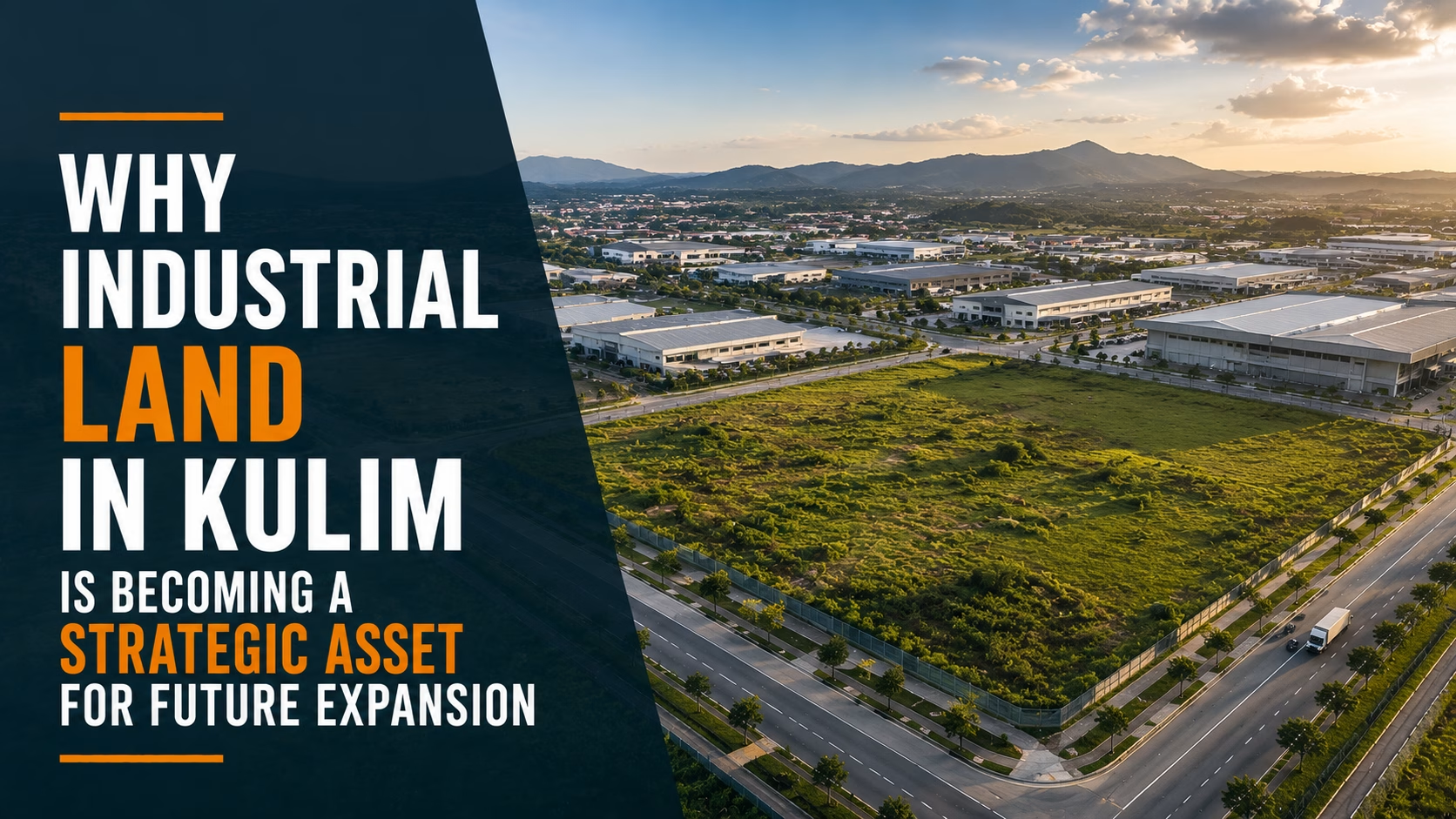
Over the past decade, Kulim has evolved from a regional manufacturing location into one of Northern Malaysia’s most important industrial growth corridors. While much of the attention surrounding Kulim often focuses on factories, manufacturing facilities, and industrial parks, the conversation among businesses and industrial investors is gradually shifting towards another asset class, industrial land.
For many companies today, securing industrial land is no longer simply about finding a site for future construction. Instead, it has become part of a broader long-term strategy involving operational expansion, supply chain positioning, infrastructure accessibility, and business continuity planning.
As industrial ecosystems continue expanding across Northern Malaysia, strategically located industrial land is becoming increasingly difficult to replace. Businesses that once prioritised completed factories are now paying closer attention to development-ready land that can support future operational requirements and customised industrial facilities.
This shift is particularly visible in Kulim, where growing industrial activity, improving infrastructure, and stronger regional connectivity continue strengthening the importance of industrial land ownership.
Businesses searching for industrial opportunities can explore available listings through Industrial Propstreet’s Kulim land listings and other industrial property opportunities throughout Malaysia via Industrial Propstreet.
Kulim Has Become One of Northern Malaysia’s Most Important Industrial Corridors
Kulim’s position within Northern Malaysia has changed significantly over the years. Previously viewed as a secondary manufacturing location supporting neighbouring industrial centres, the district now forms an important part of the broader Northern Corridor Economic Region (NCER).
Its strategic location allows businesses to benefit from proximity to Penang’s established industrial ecosystem while maintaining access to larger land parcels and future development opportunities that are increasingly difficult to find within more mature industrial zones.
The continued development of industrial infrastructure throughout Northern Malaysia has also strengthened Kulim’s role within regional supply chains. Rather than functioning independently, Kulim increasingly operates as part of an interconnected industrial network that includes Penang, Perai, Batu Kawan, Simpang Ampat, and other manufacturing centres across the northern region.
According to the Northern Corridor Implementation Authority (NCIA), the NCER continues focusing on investment attraction, industrial competitiveness, infrastructure development, and economic growth initiatives to strengthen Northern Malaysia’s position as a regional investment destination. These efforts continue supporting long-term industrial activity throughout Kedah, including Kulim.
As industrial ecosystems become increasingly integrated, land located within strategic industrial corridors often becomes more valuable due to its ability to support future manufacturing, warehousing, logistics, and industrial service activities.
Industrial Land Has Become More Than Just a Development Site
Historically, industrial land was often viewed simply as a location where future buildings could be constructed. Today, businesses increasingly view industrial land as a strategic operational asset.
This change is largely driven by the way industrial planning has evolved. Manufacturers are no longer making expansion decisions based solely on current production requirements. Instead, many companies are evaluating how a location can support their operations over the next ten, fifteen, or even twenty years.
Industrial land provides flexibility that completed buildings may not always offer. Businesses can design facilities according to specific operational requirements, integrate automation systems more effectively, accommodate future warehouse expansion, and create production layouts that align with long-term manufacturing strategies.
More importantly, land ownership provides greater control over future development decisions.
As industrial corridors mature, businesses often discover that finding suitable development-ready sites becomes increasingly challenging. While factory buildings can be renovated and equipment can be replaced, strategically located industrial land cannot easily be recreated once surrounding development has taken place.
The distinction becomes clearer when comparing different industrial assets.
| Industrial Asset | Ease of Replacement |
|---|---|
| Machinery and Equipment | Relatively Easy |
| Warehouses | Moderate |
| Factory Buildings | Moderate |
| Strategically Located Industrial Land | Difficult |
For this reason, many businesses now regard industrial land as a long-term strategic resource rather than simply a property acquisition.
Why More Businesses Are Securing Land Before Expansion Plans Are Finalised
A notable trend emerging across industrial markets is the growing number of businesses acquiring land before immediate development needs arise.
Traditionally, companies would purchase land only when they were ready to begin construction. However, this approach is becoming less common in rapidly developing industrial regions.
Today, many organisations recognise that industrial expansion often occurs faster than expected. New customer contracts, production increases, supply chain diversification, and operational growth can create unexpected demand for additional space.
By securing industrial land early, businesses gain greater flexibility to respond to future opportunities without facing potential land shortages or escalating acquisition costs later.
This approach is particularly relevant in Kulim because industrial development continues expanding throughout the region. Businesses that secure suitable sites today may have significantly more options when planning future facilities compared to those that delay acquisition decisions.
For manufacturers involved in electronics, engineering, logistics, packaging, and industrial support services, land ownership can provide valuable long-term operational certainty.
Rather than adapting business requirements to available facilities, companies can develop facilities that are specifically designed around their operational needs.
Infrastructure Development Continues Strengthening Industrial Land Demand
One of the most important factors influencing industrial land demand is infrastructure.
Industrial land derives much of its long-term value from its accessibility to transportation networks, logistics facilities, utilities, and surrounding industrial ecosystems.
Kulim benefits from strong connectivity to major transportation infrastructure throughout Northern Malaysia. Businesses operating within the area enjoy convenient access to the North-South Expressway, Penang Second Bridge, Penang Port, and Penang International Airport.
These connections are increasingly important because modern industrial operations rely heavily on efficient movement of goods, raw materials, and finished products.
The Malaysian government’s long-term development plans continue reinforcing this trend. Under the Thirteenth Malaysia Plan (RMK13), infrastructure improvements, regional connectivity enhancement, and industrial ecosystem strengthening remain key priorities supporting national competitiveness.
As logistics networks continue improving, industrial land located within well-connected corridors is expected to remain highly attractive for future development.
For businesses evaluating industrial land opportunities, infrastructure accessibility often has a direct influence on future operational efficiency and long-term site suitability.
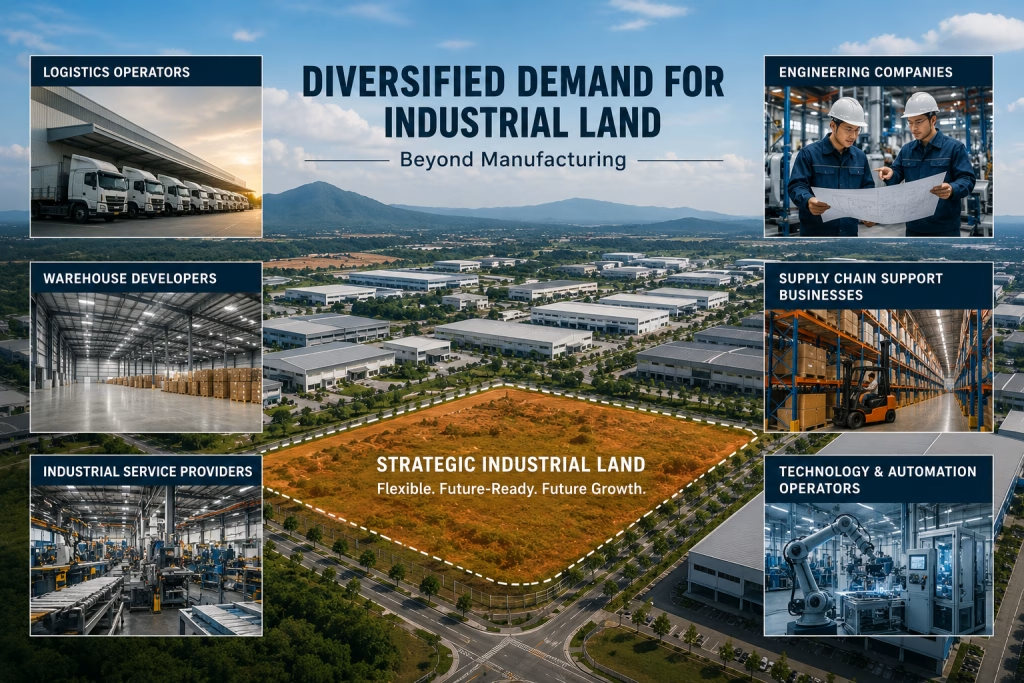
Industrial Land Demand Is No Longer Driven Solely by Manufacturers
A common misconception is that industrial land demand is driven exclusively by manufacturing companies.
While manufacturers remain important participants within the industrial property market, the profile of industrial land buyers has become significantly more diverse over recent years.
Today, logistics operators, warehouse developers, industrial service providers, engineering companies, supply chain support businesses, and technology-related industrial operators are increasingly competing for strategically located industrial sites.
This reflects broader changes occurring within modern industrial ecosystems.
Manufacturing activities are becoming more closely integrated with warehousing, distribution, automation services, engineering support, and logistics coordination. As a result, demand for industrial land now extends beyond traditional factory development.
In many cases, businesses are acquiring industrial land not because they intend to build large manufacturing facilities immediately, but because they recognise the long-term strategic importance of securing access to key industrial corridors.
This diversification of demand contributes to the growing importance of industrial land throughout regions such as Kulim.
Freehold Industrial Land Offers Long-Term Strategic Advantages
For businesses evaluating industrial land opportunities, ownership structure remains an important consideration.
Freehold industrial land often provides greater long-term flexibility because owners maintain ongoing control over future development decisions without concerns relating to lease expiry periods.
This can be particularly important for businesses planning multi-phase development projects, future facility expansion, or generational business succession strategies.
Long-term industrial operations frequently require ongoing facility upgrades, warehouse additions, machinery expansion, and evolving production requirements. Freehold ownership provides businesses with greater certainty when making these investments.
While leasehold properties may still be suitable for many operational needs, businesses planning long-term industrial growth often place significant value on the flexibility and control associated with freehold industrial land.
As industrial development continues throughout Northern Malaysia, ownership flexibility may become an increasingly important factor influencing industrial land acquisition decisions.
Kulim’s Industrial Land Outlook Remains Positive
Kulim’s industrial future continues to be supported by several structural factors.
The region benefits from strong connectivity to Penang’s manufacturing ecosystem, ongoing infrastructure investment, support from NCER initiatives, and increasing industrial diversification across Northern Malaysia.
At the same time, industrial land remains a finite resource. As industrial activity expands and infrastructure improves, strategically located development-ready sites are becoming increasingly difficult to replace.
Businesses are also becoming more proactive in their long-term planning. Rather than waiting until immediate expansion needs arise, many organisations are securing land earlier to preserve future operational flexibility.
These trends suggest that industrial land in Kulim is likely to remain an important component of long-term industrial development strategies for years to come.
For businesses planning future expansion, industrial land is increasingly viewed not simply as a property acquisition, but as a strategic asset capable of supporting operational growth, development flexibility, and long-term business objectives.
Frequently Asked Questions (FAQs)
Why are businesses buying industrial land in Kulim?
Businesses are increasingly acquiring industrial land in Kulim to support future expansion plans, custom-built facilities, long-term operational control, and strategic positioning within Northern Malaysia’s industrial corridor.
Is industrial land in Kulim suitable for future manufacturing expansion?
Yes. Kulim continues attracting manufacturing, logistics, engineering, and industrial support activities due to its connectivity, infrastructure, and integration with the broader Northern Corridor Economic Region.
What makes industrial land different from buying an existing factory?
Industrial land provides greater development flexibility, allowing businesses to design facilities according to specific operational requirements and future growth plans.
How does NCER support industrial development in Kulim?
NCER initiatives focus on industrial competitiveness, infrastructure development, investment attraction, and economic growth across Northern Malaysia, supporting long-term industrial expansion in Kulim.
What should businesses evaluate before purchasing industrial land?
Businesses should assess zoning regulations, infrastructure readiness, transportation accessibility, utility availability, surrounding industrial activity, and future development potential before making acquisition decisions.
Conclusion: Industrial Land Is Becoming a Strategic Long-Term Asset
As industrial activity continues expanding throughout Northern Malaysia, the role of industrial land is evolving beyond its traditional function as a future development site.
Businesses today are increasingly viewing industrial land as a strategic asset that supports long-term operational planning, future expansion, and greater development flexibility. In regions such as Kulim, where industrial growth continues strengthening alongside infrastructure improvements and regional economic initiatives, strategically located industrial land is becoming increasingly difficult to replace.
For organisations planning future manufacturing facilities, warehouse developments, logistics operations, or industrial service centres, securing suitable land early may provide a significant advantage in an increasingly competitive industrial environment.
Explore Industrial Land Opportunities in Kulim
Whether you are planning a custom-built manufacturing facility, future warehouse development, or long-term industrial expansion project, selecting the right location remains a critical business decision.
Explore the latest industrial land opportunities through Industrial Propstreet and discover available industrial properties positioned within one of Northern Malaysia’s fastest-growing industrial corridors. Businesses specifically searching for land opportunities in Kedah can also browse available listings and industrial property options through Industrial Prop Street’s growing industrial property portfolio.